
SIP vs Analog Intercom Comparison: Which is Best for Apartments?
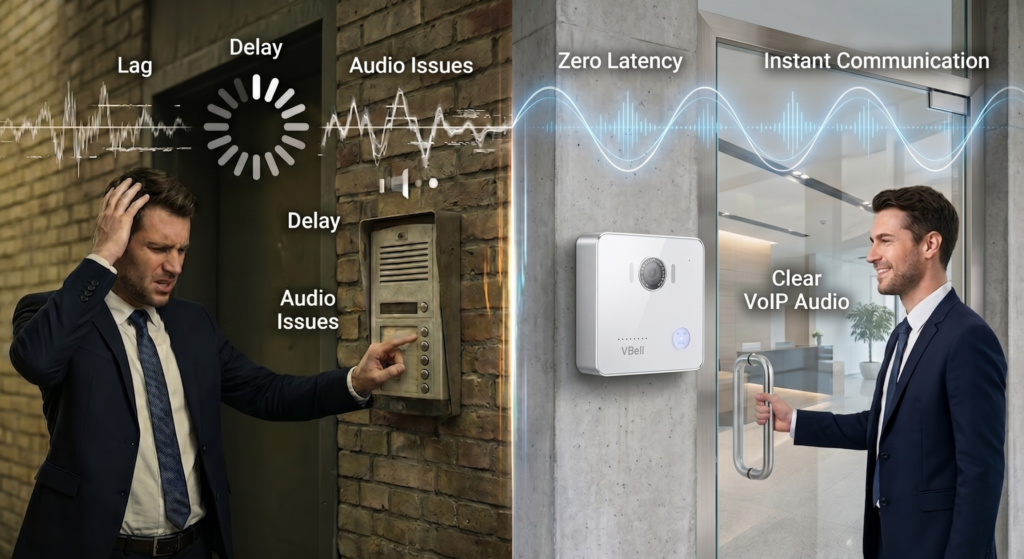
Introduction
When outfitting a modern residential complex or upgrading an existing commercial property with a communication and entry system, developers, property managers, and system integrators face a critical architectural decision. The debate surrounding the SIP vs analog intercom comparison is prevalent throughout the security and integration industry. While traditional analog systems have been the standard for decades, offering a sense of familiarity and perceived simplicity, digital IP-based SIP intercoms are rapidly becoming the new indispensable norm. Understanding the deep technical, operational, and financial differences between these two technologies is essential for making an informed investment that meets the long-term security and convenience needs of properties and their tenants.
Understanding the Fundamental Technological Differences
The core distinction in any SIP vs analog intercom comparison lies in the fundamental way audio, video, and control signals are transmitted across a building.
Analog Intercom Systems:
Traditional analog systems rely on physical, dedicated point-to-point electrical wiring. They often utilize multi-core cables—such as 4-wire, 5-wire, or specialized 2-wire configurations—to transmit raw electrical signals directly from the central entrance panel to each individual indoor handset. The infrastructure is entirely closed, proprietary to the specific manufacturer, and physically hardwired. There is no concept of a “network” in the modern IT sense; it is a closed loop of electrical circuits.
SIP Intercom Systems:
Conversely, SIP intercoms are fully digital, network-based systems. They take the raw audio and video from the door station, encode it into digital data packets, and transmit those packets over standard computer networks (LAN/WAN) using standard Ethernet cables. They utilize the universal SIP protocol to establish, manage, and terminate communication sessions across the IP network. This transforms the intercom from a standalone appliance into an integrated network device.
Infrastructure, Cabling, and Installation Challenges
One of the most significant deciding factors for integrators and developers evaluating these systems is the required infrastructure and the associated labor costs.
The Burden of Analog Cabling:
Installing an analog system, particularly in a large or multi-tower building, is incredibly labor-intensive. It often requires running thick, heavy bundles of proprietary cables from the entrance panel, through the building’s riser shafts, and down the hallways to every individual apartment. If a single wire in the bundle breaks or degrades, diagnosing the fault and replacing the cable can be an expensive, time-consuming nightmare. Upgrading an analog system often means ripping out the walls to replace the aging copper.
The Efficiency of SIP Cabling:
SIP intercoms leverage standard, universal IT infrastructure. They primarily use inexpensive Cat5e or Cat6 Ethernet cables. In the vast majority of modern new-build constructions, this network cabling is already being installed for general internet access and smart building services. This means the SIP intercom can simply share the existing building network. Furthermore, SIP devices typically support PoE (Power over Ethernet). A single Ethernet cable provides both high-speed data connectivity and electrical power to the door station or indoor monitor, significantly reducing installation time, eliminating the need for local power supplies, and slashing material costs.
Discover how our PoE-enabled SIP Door Stations can drastically reduce your installation labor costs.
Scalability and the Ability to Future-Proof
As properties expand, renovate, or as tenant demographics and needs change, the communication system’s ability to adapt is a crucial consideration.
Limitations of Analog Systems:
Analog systems are known for their rigidity and lack of scalability. Expanding an analog system typically requires replacing cables or even devices. Furthermore, their feature set is permanently locked to the range supported by the hardware at the time of manufacture. Upgrading to additional functionality usually means replacing the entire system or adding other equipment.
The Agile Scalability of SIP:
SIP intercom systems are inherently agile and scalable. Because they function like any other IT device on the network, adding a new in-room touchscreen display to a renovated apartment or an additional access control terminal to a new secondary entrance simply requires plugging the device into the nearest PoE network switch. You can then configure its IP address and SIP account via a web interface. Furthermore, firmware updates can push entirely new features and security enhancements to the device over time without requiring any physical hardware replacement..
Advanced Feature Sets and Tenant Experience
Modern tenants expect smart, connected, and frictionless experiences, and this is where the SIP vs analog intercom comparison heavily favors digital solutions.
The Basic Analog Experience:
Traditional analog systems offer rudimentary, baseline functionality: standard-definition audio communication, perhaps low-resolution composite video that struggles in low light, and a physical button to trigger a door release. They are isolated systems that cannot natively interact with other modern smart building technologies.
The Premium SIP Experience:
SIP intercoms offer High-Definition (HD) video (often 1080p or higher), wide dynamic range cameras for challenging lighting, and crystal-clear wideband audio. More importantly, because they reside on the IP network, they can integrate deeply with cloud services and mobile applications. This allows residents to receive video calls, converse with delivery drivers, and unlock doors directly from their smartphones, regardless of whether they are sitting on their couch or traveling in another country. Furthermore, SIP systems can integrate with building Video Management Systems (VMS), VoIP phone networks, and smart home automation platforms.
Interoperability and Vendor Independence
For professional system integrators and long-term property managers, flexibility in hardware choice and avoiding vendor lock-in is a massive strategic advantage.
Analog Vendor Lock-in:
Analog systems use proprietary signaling protocols and wiring architectures. If you install Brand A’s door station at the entrance, you are strictly forced to use Brand A’s indoor monitors and Brand A’s central matrix. If that specific manufacturer goes out of business, discontinues the product line, or raises prices arbitrarily, you are trapped. Often, replacing a single broken component years later requires a full system rip-and-replace.
The SIP Open Standard Advantage:
SIP is an open, global standard maintained by the IETF. This guarantees a high level of interoperability across different manufacturers. An integrator has the freedom to use a highly rugged, vandal-resistant SIP door station from one vendor, elegant, high-end touchscreen monitors from a second vendor, and an open-source software SIP server to tie the entire network together. This flexibility protects the investment and provides endless options for maintenance and upgrades.
Conclusion
When conducting a comprehensive SIP vs analog intercom comparison, the conclusion for modern apartment buildings and commercial developments is overwhelmingly clear. While legacy analog systems might still find a niche application in very small, budget-constrained retrofits where existing copper wiring is perfectly intact, they are largely considered obsolete for new developments or major upgrades.
SIP intercom systems offer the scalability, advanced smart features, utilization of standard network infrastructure, and critical interoperability that modern property managers and developers demand. By choosing an IP-based SIP solution, integrators provide a robust, future-proof foundation that actively enhances property value, improves building security, and delivers the smart, connected living experience that modern residents now expect as standard.