
Mobile Access Control in 2026: Why Smartphones Are Replacing Keycards and Indoor Monitors
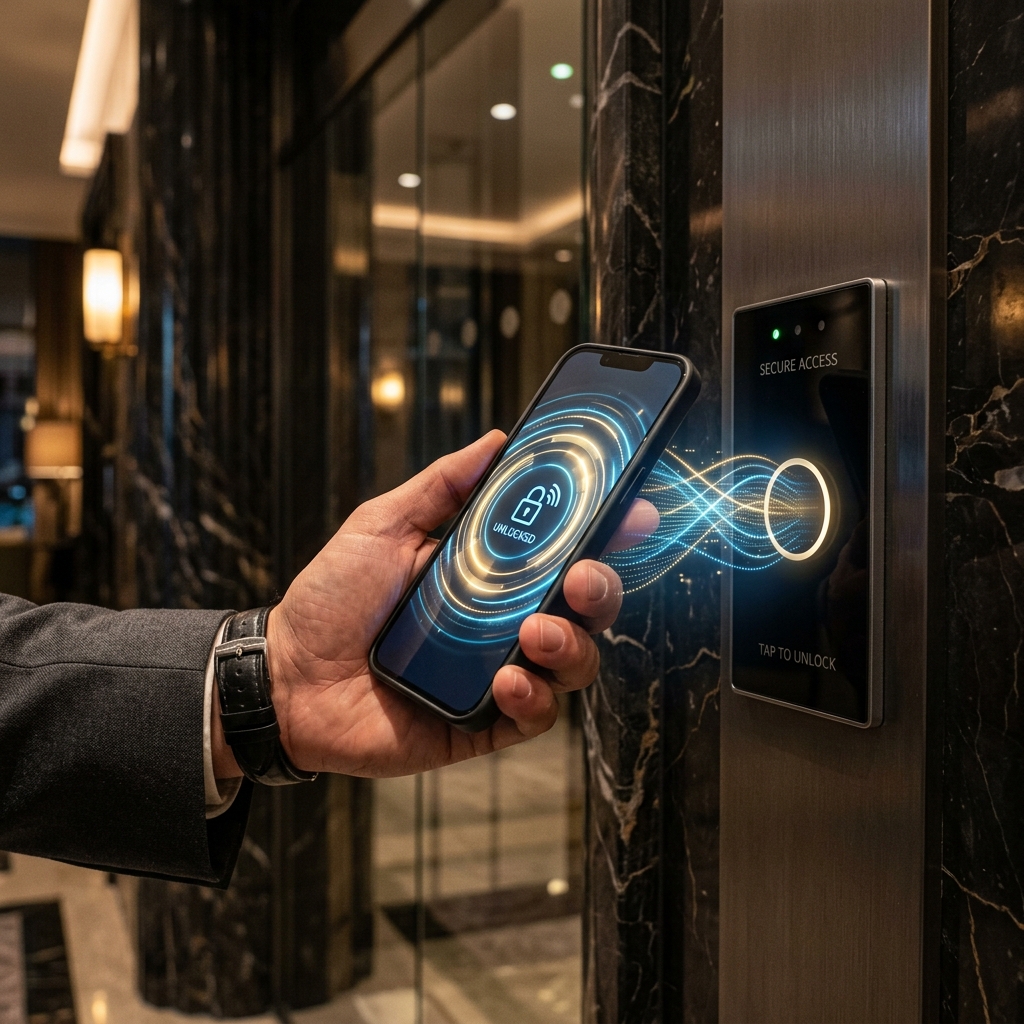
Remember the last time you checked into a modern hotel? You likely bypassed the front desk entirely, using your smartphone to unlock your room door with a simple tap. In 2026, this seamless, friction-free experience is no longer exclusive to luxury hospitality; it has become the standard for modern residential and commercial properties. Recently, industry leaders highlighted touchless access control and smartphone-centric systems as the dominant trends redefining building security. The traditional physical keycard and wall-mounted indoor monitors are rapidly disappearing. Instead, forward-thinking property developers and system integrators are embracing mobile access control as the foundation of modern property design. By leveraging smartphone door access, buildings can eliminate redundant hardware, reduce installation complexity, and deliver the modern, secure entry experience that today’s tech-savvy residents demand.
1. Why Keycards and Indoor Monitors Are Becoming Obsolete
For decades, multi-family residential complexes and commercial office buildings relied on a combination of physical RFID keycards and wall-mounted indoor monitors in every unit to manage visitors. However, in 2026, the operational inefficiencies and high capital expenditures of these systems are impossible to justify.
First, consider the sheer cost of hardware and labor. Wiring dedicated indoor monitors to every single unit in an apartment building requires hundreds of meters of specialized copper cabling, heavy conduit routing, and days of intrusive labor. On average, a physical indoor monitor costs between $150 and $300 per unit, plus an additional $100 to $200 per unit in labor and cabling costs. For a 50-unit building, this quickly escalates to over $10,000 just for unit-level hardware and installation.
Second, physical keycards represent a continuous administrative headache and security risk. Residents lose keycards constantly, forcing property managers to spend valuable time re-issuing cards and updating access control databases. If a lost keycard is not deactivated immediately, the building’s security is compromised. In contrast, modern residents almost never lose or forget their smartphones. Furthermore, residents strongly prefer using intuitive smartphone apps over carrying a bulky ring of physical keys and plastic cards, making mobile-first systems a key selling point for new developments.
2. What Is Mobile Access Control and How It Works
At its core, modern smart building access control centers on shifting the credential and the user interface from physical hardware to the user’s mobile device. But how does a visitor communicate with a resident without an indoor monitor? The answer lies in advanced IP communication and cloud routing.
Let’s look at the workflow of a modern mobile access control apartment building system using a state-of-the-art entry station like the AvaDesign VBELL DP-104. When a guest arrives at the building entrance:
- Visitor initiates call — The visitor approaches the VBELL DP-104 door station and presses the call button for the resident they wish to visit.
- IP calling over AWS — The VBELL DP-104 door station places a call using the building’s internet connection. Rather than routing to a physical monitor inside the apartment, the call is sent to a high-speed AWS cloud server.
- Smartphone routing — The AWS cloud server instantly routes the HD video call directly to the resident’s smartphone app, regardless of their location.
- Two-way communication — The resident receives a push notification, answers the video call, talks to the visitor, and verifies their identity in real time.
- Remote door unlock — The resident taps a button on their screen, which sends a secure smartphone door unlock no monthly fee command back to the door station, unlocking the entrance.
Because the system relies on the AWS cloud server to route calls, residents can answer the door and grant entry from their living room, their office, or even while traveling abroad.
3. Benefits for Developers, Property Managers, and Residents
The advantages of a mobile-first entry system extend to every stakeholder involved in a property:
For Property Developers
Adopting a mobile-first system dramatically lowers construction costs by removing the need for unit-level intercom wiring. This reduces electrical labor hours and simplifies scheduling. At the same time, offering a state-of-the-art video intercom system enhances the property’s appeal to modern buyers and renters, driving up property valuation and enabling developers to command premium prices.
For Property Managers
Administrative overhead is slashed. When a new resident moves in, property managers can onboard them in seconds through a web portal, sending a digital credential directly to their smartphone. There are no physical keys to cut or cards to program. The system also supports QR code door access, allowing property managers or residents to issue temporary guest passes for delivery drivers, cleaners, or friends. These QR codes can be set to expire after a single use or a specific time window, enhancing security.
For Residents
Residents enjoy unparalleled convenience and peace of mind. They can answer visitor calls and verify guests visually from anywhere in the world. Best of all, they benefit from a system that offers a smartphone door unlock no monthly fee experience, eliminating the burden of recurring monthly subscriptions that plague other smart home platforms.
4. Product Highlights: VBELL DP-104
The AvaDesign VBELL DP-104 is a flagship 2-in-1 PoE SIP intercom system designed to be the heart of the modern home. Made in Taiwan, this elegant and easy-to-use product is ideal for new developments or homes with existing design.
As a multi-mode access controller, the DP-104 supports RFID cards and QR codes. While the DP-104 itself does not have facial recognition, its open architecture allows for easy upgrades via external servers to add facial recognition functionality.
The DP-104 is powered by standard PoE (IEEE 802.3af), transmitting power and data simultaneously over a single network line. It integrates seamlessly with standard SIP and PBX systems such as FreePBX, Asterisk, and 3CX, and connects to a secure AWS cloud server, routing high-definition video calls directly to residents’ smartphones. It is the ideal plug-and-play intercom solution for modern apartments.
Conclusion: The Mobile-First Building Is Here
SIP intercom systems represent the future of building communication — replacing outdated analog wiring with flexible, scalable, IP-based technology that residents and building managers actually want to use.
The VBELL DP-104 by AvaDesign Technology is engineered specifically for system integrators and developers who want to maximize installation efficiency, reduce material costs, and deliver a premium resident experience — all without locking their clients into expensive subscriptions or proprietary platforms.